

The Logistics Nightmare That's Quietly Limiting Your Business Growth 01/15
Understand when in-house fulfilment stops making sense and how third-party logistics, especially in Brisbane, can streamline multi-channel operations, cut costs, and scale your business.
image for illustrative purpose
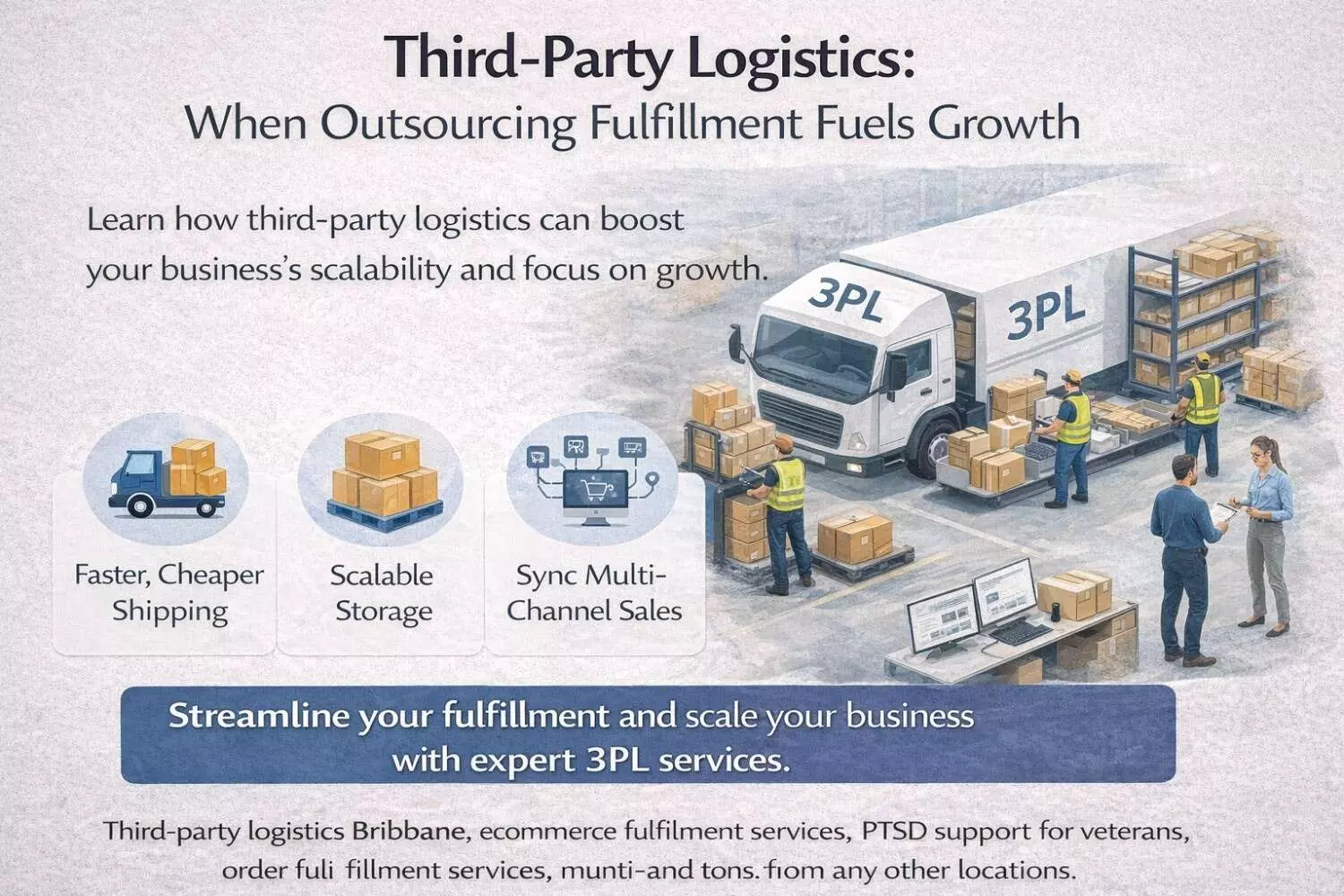
Nobody starts a business because they're passionate about inventory management and shipping logistics. You've got a product you believe in, customers who want it, and a vision for where the business could go. The warehousing and fulfilment stuff? That's just the unglamorous bit you've got to deal with to make it all work.
But here's what I've noticed talking to business owners: logistics becomes the bottleneck far more often than they expect. You've got the demand, you've got the supply, but somehow you can't get products from point A to point B efficiently enough to capitalise on the opportunity in front of you.
Maybe you're continuously out of inventory on your fine sellers due to the fact you can't expect inventory wishes well. Maybe you're missing reduce-off times for same-day dispatch due to the fact your crew is crushed. Maybe you are haemorrhaging money on delivery costs because you don't have the quantity to negotiate better costs. Whatever the unique issue, the underlying problem is the identical: your logistics setup cannot maintain tempo together with your goals.
The Multi-Channel Complexity Problem
Selling through multiple channels is practically essential these days. You've got your own website, you're on a few marketplaces, maybe you're doing wholesale as well. It's great for revenue diversification, but it's a nightmare for inventory management if you're handling it all manually.
You oversell on one platform because you didn't update stock levels fast enough. You've got inventory sitting in the wrong place for where orders are actually coming from. You're trying to reconcile stock counts across four different systems and nothing quite adds up. It's death by a thousand small inefficiencies.
This is where professional logistics infrastructure makes a tangible difference. Proper systems integrate across all your sales channels, updating inventory in real-time and routing orders efficiently. You're not manually checking stock levels or worrying about overselling. The technology handles the complexity that would otherwise require a full-time staff member to manage poorly.
Location Actually Matters More Than You'd Think
There's a reason businesses pay attention to where their logistics operations are based. If you're shipping primarily to customers in Queensland and northern New South Wales, having your inventory in Brisbane makes a significant difference to delivery times and costs compared to shipping everything from Sydney or Melbourne.
Faster delivery isn't just about customer satisfaction—though that matters. It's also about competitive advantage. When customers can get their order tomorrow instead of in three to five business days, your conversion rates improve. Your cart abandonment drops. You can charge slightly more because the service level justifies it.
For businesses working with third-party logistics Brisbane providers, there's also the practical benefit of proximity. If you need to check on something, drop off samples, or handle an urgent issue, you can actually do it. You're not relying entirely on email and hoping for timely responses across time zones.
The True Cost of Warehouse Space
If you're renting commercial space to store inventory, you're probably paying more than you realise. There's the obvious rent, but also the less obvious costs—insurance, utilities, security, equipment, and the opportunity cost of having capital tied up in a long-term lease.
Then there's the efficiency question. Unless you're operating at serious scale, your warehouse space is probably underutilised. You need enough room for peak inventory levels, which means it's half-empty most of the time. You're paying for space you're not using, and you don't have the flexibility to scale up or down as demand fluctuates.
Professional logistics operations spread these costs across multiple clients. They've got the infrastructure, the equipment, and the systems already in place. They can offer flexible pricing that scales with your actual volume rather than requiring you to pay for fixed capacity regardless of whether you're using it.
When In-House Fulfilment Stops Making Sense
There's a certain volume where doing fulfilment in-house makes perfect sense. When you're small enough, it's actually more cost-effective and gives you tighter control. But there's a tipping point where the economics flip.
It's generally somewhere round 50-a hundred orders per day, even though it varies relying on your margins, product complexity and increase trajectory. Below that threshold, you may probably control with a small group and primary structures. Above it, you need severe infrastructure right warehouse management structures, more than one team of workers participants, green select-and-p.C. Approaches, delivery automation.
Most corporations can not justify that infrastructure investment. The capital required, the know-how wished, the continued control overhead it is a distraction from what you're really desirable at and what in reality drives your enterprise forward.
The Questions You Should Be Asking
If you're evaluating whether to outsource logistics, or which provider to work with, there are questions worth asking beyond just pricing.
How quickly can they onboard you? Some providers take months to get you set up, which might be fine if you're planning well ahead but disastrous if you're trying to solve an immediate capacity problem.
What happens when things go wrong? Because they will occasionally. How do they handle damaged stock, picking errors, or shipping delays? What's their communication like when issues arise?
Can they actually handle your specific requirements? If you sell fragile items that need special packaging, oversized products, temperature-sensitive goods, or anything else with special handling needs, make sure they have experience with it.
What's their technology actually like? Not what they claim it does, but what does the day-to-day user experience look like? Clunky systems that require constant manual intervention defeat the purpose.
Making the Strategic Shift
Outsourcing fulfilment isn't just an operational decision—it's a strategic one. You're deciding to focus your resources on what differentiates your business rather than on logistics, which is essentially a solved problem if you work with the right partner.
The businesses that grow sustainably are usually the ones that recognise their constraints early and address them proactively. They don't wait until the logistics nightmare is actively costing them sales or burning out their team. They make the shift when they've got the breathing room to do it properly.
Working with third-party logistics specialists isn't admitting defeat or taking the easy way out. It's recognising that your competitive advantage lies in your products, your brand, and your customer relationships—not in how efficiently you can pack boxes. Let someone who specialises in logistics handle the logistics, so you can focus on building the business you actually set out to create.
Sometimes growth requires letting go of the things you used to do yourself. This is usually one of them.





